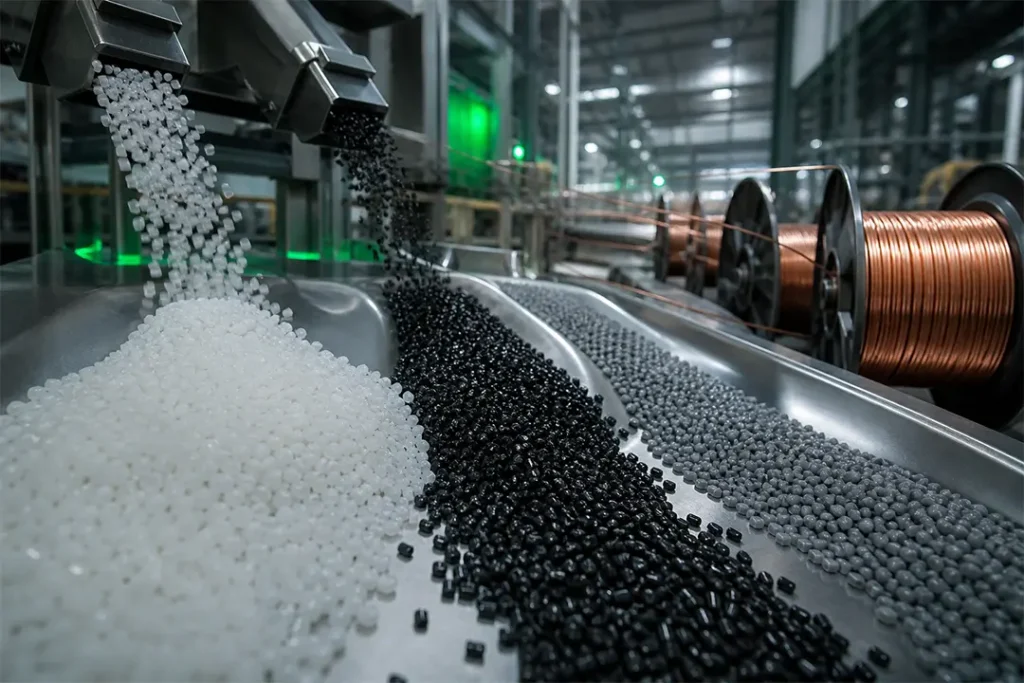
What Are Polymeric Materials? Types, Applications & Industrial Benefits
Polymeric materials have become one of the most essential components in modern industries due to their lightweight structure, durability, flexibility, and cost-efficiency.
These advanced materials are widely used across manufacturing, construction, packaging, automotive production, and especially the wire & cable industry where reliable insulation and long-term performance are critical.
What Are Polymeric Materials?
Polymeric materials are substances made from long molecular chains engineered to provide excellent thermal, mechanical, and chemical performance. These materials can be natural or synthetic and are widely used because of their flexibility, electrical insulation properties, corrosion resistance, and durability.
Modern industries rely heavily on polymer compounds because they allow manufacturers to achieve lightweight structures, efficient production, and reliable long-term operational performance.
Industrial Advantages of Polymers
Advanced polymer compounds provide lightweight performance, strong insulation, chemical resistance, and high production efficiency across modern industrial applications.
Main Types of Polymeric Materials
Thermoplastics
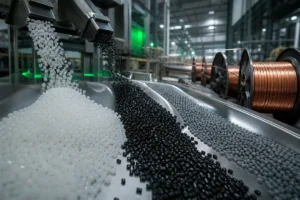
Thermoplastics can be melted and reshaped multiple times, making them ideal for industrial manufacturing and recycling processes.
- Polyethylene (PE)
- Polypropylene (PP)
- PVC
- Polystyrene (PS)
Thermosetting Polymers
Thermosetting materials provide excellent thermal resistance and structural stability after curing and are widely used in demanding industrial applications.
Elastomers
Elastomers are flexible polymer materials commonly used in rubber-based products, sealing systems, and high-performance industrial applications requiring elasticity and durability.
Key Benefits of Polymeric Materials
- Lightweight structure for reduced product weight
- Excellent electrical insulation performance
- High resistance against chemicals and moisture
- Flexible manufacturing and easy processing
- Cost-effective production for industrial scalability
- Reliable thermal and mechanical performance
Applications in Wire & Cable Industry
In the wire and cable industry, polymeric materials such as PVC, PE, XLPE, and HFFR compounds are widely used as insulation and protective sheathing materials. These compounds provide electrical safety, thermal resistance, flexibility, and long-term durability.
Why Polymer Quality Matters
The quality of polymer compounds directly affects the safety, durability, and operational reliability of industrial products. High-quality formulations improve processing efficiency, mechanical performance, and resistance against environmental conditions.
For cable manufacturers and industrial producers, selecting premium polymer granules and compounds is essential to achieving stable production quality and compliance with international standards.
Conclusion
Polymeric materials continue to play a critical role in industrial innovation and manufacturing development. Their unique combination of flexibility, durability, insulation performance, and cost-efficiency makes them indispensable across multiple industries.
As modern industrial requirements continue to evolve, advanced polymer compounds remain essential for safe, efficient, and long-lasting manufacturing solutions.
Frequently Asked Questions
What are polymeric materials?
Polymeric materials are engineered substances made from long molecular chains used across industrial and commercial applications requiring durability and flexibility.
Why are polymers important in cable manufacturing?
Because they provide excellent insulation, flexibility, thermal resistance, moisture protection, and long-term durability for electrical systems.
What are polymer granules used for?
Polymer granules are raw materials used to manufacture industrial plastic products, cable compounds, insulation materials, and advanced polymer solutions.
Which polymer materials are commonly used in the wire and cable industry?
PVC, PE, XLPE, PP, and HFFR compounds are among the most commonly used polymer materials in cable insulation and sheathing applications.